
Why is it tested?
Because a pool that looks clear and chlorinated may still fail the regulation’s zero tolerance — and the result has to be displayed publicly.
What does the regulation require?
The Turkish Regulation on the Health Principles and Conditions Applicable to Swimming Pools defines the chemical properties of pool water in Annex 1, the physical properties in Annex 2 and the microbiological properties in Annex 3.
The microbiological limits in Annex 3 are: for total colony count, TS EN ISO 6222 with a maximum of 200 CFU/ml at 37 °C in 24 hours; for total coliform bacteria and E. coli, TS EN ISO 9308-1 with 0/100 ml; and for Pseudomonas aeruginosa, TS EN ISO 16266 with 0/100 ml. Analysis frequency is once a month, and twice a month in periods of heavy pool use.
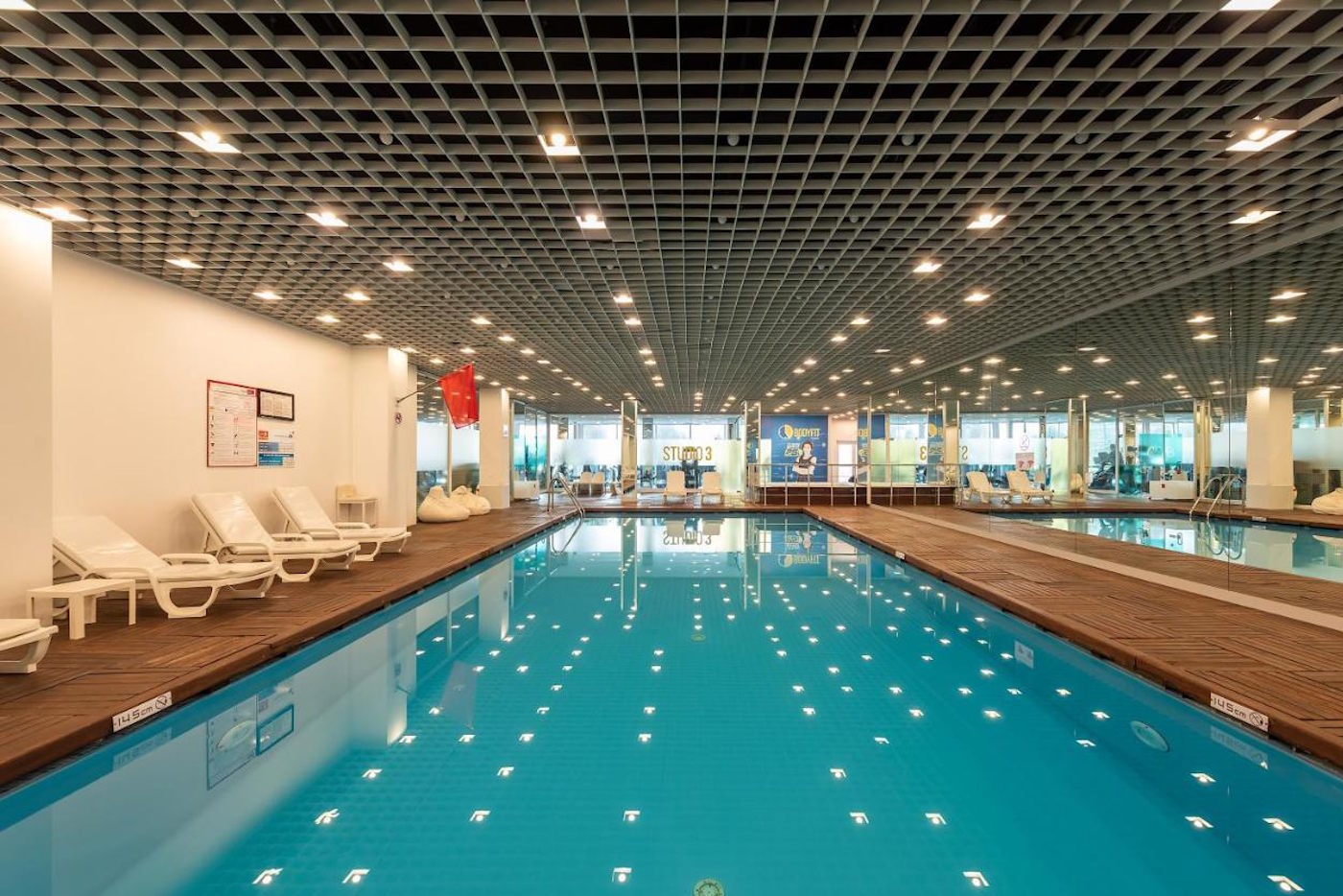
The physical requirements in Annex 2 are numerical too: colour 10 units as Pt/Co, turbidity 5 units as SiO₂ or Jackson units, and temperature 26–28 °C for indoor pools and 26–38 °C for outdoor pools.
The regulation also sets separate limits for free chlorine in Annex 1 and requires free chlorine to be measured at the poolside. We do not reproduce the numeric chlorine values here: our reading of the official annex file merges table cells and could not be confirmed against a second source. For current values, please consult the annex to the regulation itself.
Why is Pseudomonas aeruginosa a separate parameter?
In pool water the indicators of faecal contamination are coliforms and E. coli. Pseudomonas aeruginosa answers a different question: the bacterium can establish itself as biofilm in wet environments, in filter beds and on pipe surfaces.
A Pseudomonas finding therefore suggests a problem embedded in the system itself rather than a momentary contamination from a single bather: inadequate circulation, lapsed filter maintenance, dead volumes. That the regulation sets 0/100 ml for this parameter as well shows that system hygiene is treated as seriously as product hygiene.
What happens if a result is non-conforming?
The regulation defines a clear sequence: if the analysis result of a sample taken from the pool water does not meet the properties set out in Annexes 1 and 2, the operator is warned in writing to remedy the non-conformity and take corrective measures. If a fresh sample taken after the requirements have been met is compliant, no action is taken against the business.
If the results are again non-compliant, however, the pool’s operation is suspended until those properties are met. Pool water analysis is not a formality but an instrument of inspection that determines whether the business stays open.
Why is accreditation a requirement here?
The regulation requires laboratories that will take samples and perform analyses to hold method accreditation for the parameters set out in Annexes 1, 2 and 3. Who performs these analyses is therefore part of whether the result is valid at all.
The regulation also introduces transparency: while the pool is open, the temperature, pH and free chlorine values of the pool water together with the most recent analysis results for its microbiological properties must be displayed, in writing or electronically, on a board where users can see them.
The General Directorate of Public Health of the Ministry of Health states that parameters such as temperature, pH and free chlorine must be analysed by the operator at least three times a day at four-hour intervals. Laboratory analysis does not replace those daily measurements; it verifies them.
Sources
- [1] Regulation on the Health Principles and Conditions Applicable to Swimming Pools (Official Gazette, 6 March 2011, No. 27866) — Resmî Gazete (retrieved 31 August 2026)
- [2] Pool Waters — T.C. Sağlık Bakanlığı, Halk Sağlığı Genel Müdürlüğü (retrieved 31 August 2026)
The medical and legal information in this article is taken from the sources listed above and is not diagnostic or treatment advice. Figures are reproduced as published in those sources.