Why is it tested?
Because when a result rises the problem is usually not in the source but in the treatment or in the building’s own plumbing.
Copper: it comes from the pipe and targets the gut
According to WHO’s drinking-water guidelines the guideline value for copper is 2 mg/l. The basis: to be protective against the acute gastrointestinal effects of copper and to provide an adequate margin of safety in populations with normal copper homeostasis.
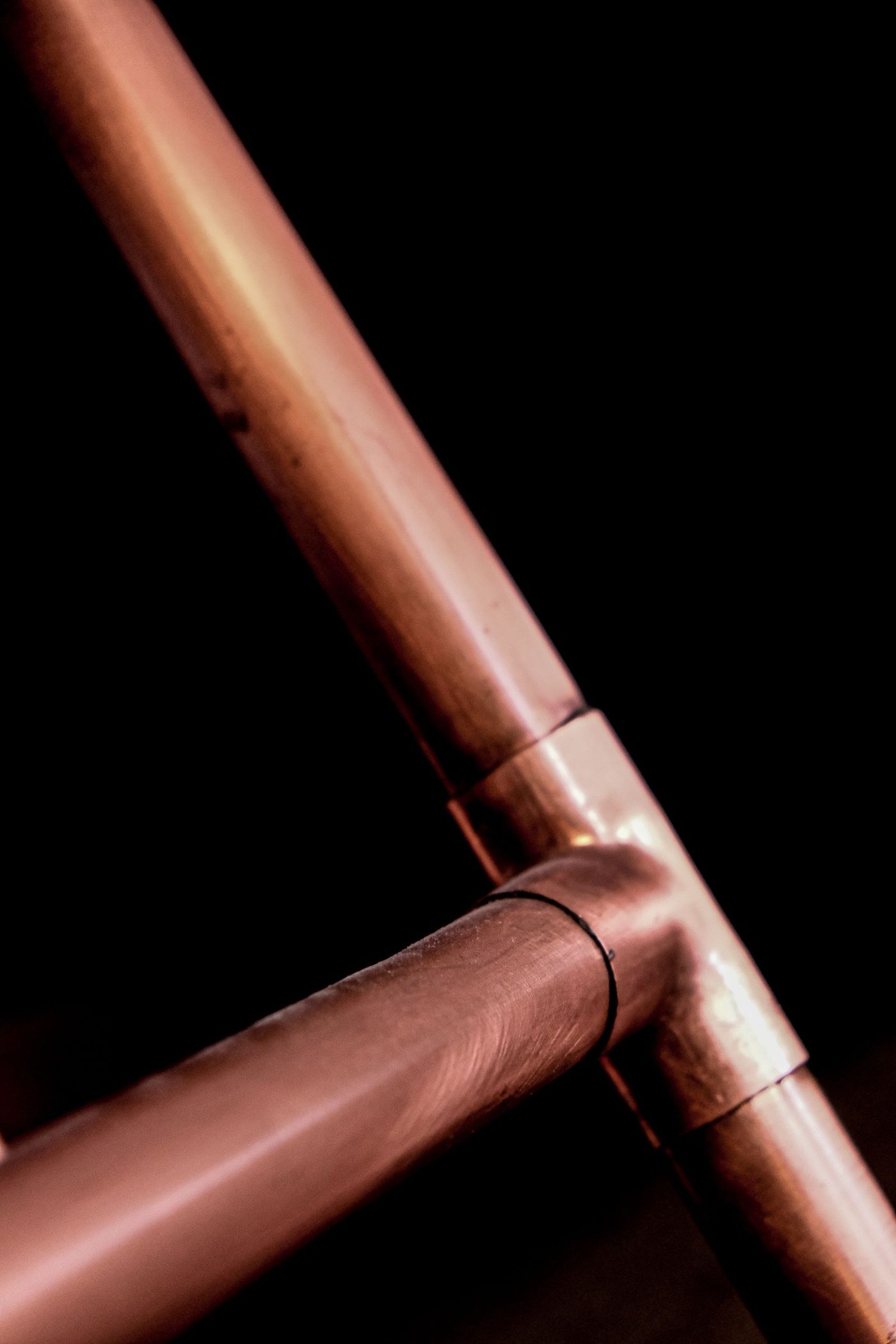
The source is almost always the plumbing: WHO states that concentrations in drinking-water range from ≤ 0.005 to > 30 mg/l, primarily as a result of the corrosion of interior copper plumbing.
One detail matters for facilities: copper is not removed by conventional treatment processes — but it is not normally a raw water contaminant either. The remedy is not in treatment but in the plumbing and in how long water stands in the pipes.
Aluminium: the treatment’s own residue
Aluminium is the most abundant metallic element and constitutes about 8% of the Earth’s crust. According to WHO, aluminium salts are widely used in water treatment as coagulants to reduce organic matter, colour, turbidity and microorganism levels. That use may lead to increased concentrations of aluminium in finished water.
Where residuals are high, the problem that follows is aesthetic: undesirable colour and turbidity. An aluminium result is therefore read alongside the colour and turbidity results.
WHO has not set a health-based guideline value for aluminium. The reasoning is notable: a health-based value of 0.9 mg/l could be derived from the JECFA provisional tolerable weekly intake, but that value exceeds practicable levels based on optimisation of the coagulation process in plants using aluminium-based coagulants: 0.1 mg/l or less in large water treatment facilities and 0.2 mg/l or less in small facilities.
People ask about aluminium and Alzheimer disease. WHO’s 1997 assessment is balanced: the positive relationship shown in several epidemiological studies cannot be totally dismissed, but strong reservations about inferring a causal relationship are warranted, because those studies failed to account for confounding factors and for total aluminium intake from all sources.
Iron: not health, but acceptability
WHO has not established a guideline value for iron, and gives the reason in one line: “Not of health concern at levels found in drinking-water.” The additional comment is: “May affect acceptability of drinking-water.”
Iron is found in natural fresh waters at levels ranging from 0.5 to 50 mg/l. In drinking-water it may also be present as a result of the use of iron coagulants or the corrosion of steel and cast iron pipes during distribution.
In practice an iron result explains a complaint: red-brown water, a metallic taste, staining on laundry and ceramics. These are not health problems, but in an accommodation business they are guest complaints — and they usually point at the state of the plumbing.
Same metal, different limit: the sample type decides
A metal’s limit depends on the type of sample. Copper is 2 mg/L in drinking and utility water but 1 mg/L in swimming pool water — in pools copper usually comes from algaecides and at high concentrations stains hair and tiles green, so the limit is tighter.
For aluminium the two regulations land in the same place: 200 µg/L in drinking water, 0.2 mg/L in pool water — the same figure in different units. Iron does not appear in the chemical annex of the pool regulation; in drinking and utility water it is an indicator parameter at 200 µg/L.
So when reading a report, first check what kind of sample it is: the same number can be compliant in one matrix and over the limit in another.
Sources
- [1] Guidelines for Drinking-water Quality — Copper chemical fact sheet — Dünya Sağlık Örgütü (WHO) (retrieved 1 September 2026)
- [2] Guidelines for Drinking-water Quality — Aluminium chemical fact sheet — Dünya Sağlık Örgütü (WHO) (retrieved 1 September 2026)
- [3] Guidelines for Drinking-water Quality — Iron chemical fact sheet — Dünya Sağlık Örgütü (WHO) (retrieved 1 September 2026)
- [4] Regulation on Waters Intended for Human Consumption, Annex 1 (Official Gazette, 17 February 2005, No. 25730) — Resmî Gazete (retrieved 6 September 2026)
- [5] Regulation on the Health Principles and Conditions Applicable to Swimming Pools — Annexes (Official Gazette, 6 March 2011, No. 27866) — Resmî Gazete (retrieved 6 September 2026)
The medical and legal information in this article is taken from the sources listed above and is not diagnostic or treatment advice. Figures are reproduced as published in those sources.